FUEL, FINANCE, AND STREET PRESSURE
Over the next 3-7 days, competing energy diplomacy and financial stabilisation efforts could produce acute market and political stress, while protest movements and a storm landfall amplify logistical and security strains. If trends continue, expect short-lived supply disruptions, targeted diplomatic friction, and localized spikes in civil unrest across multiple regions.
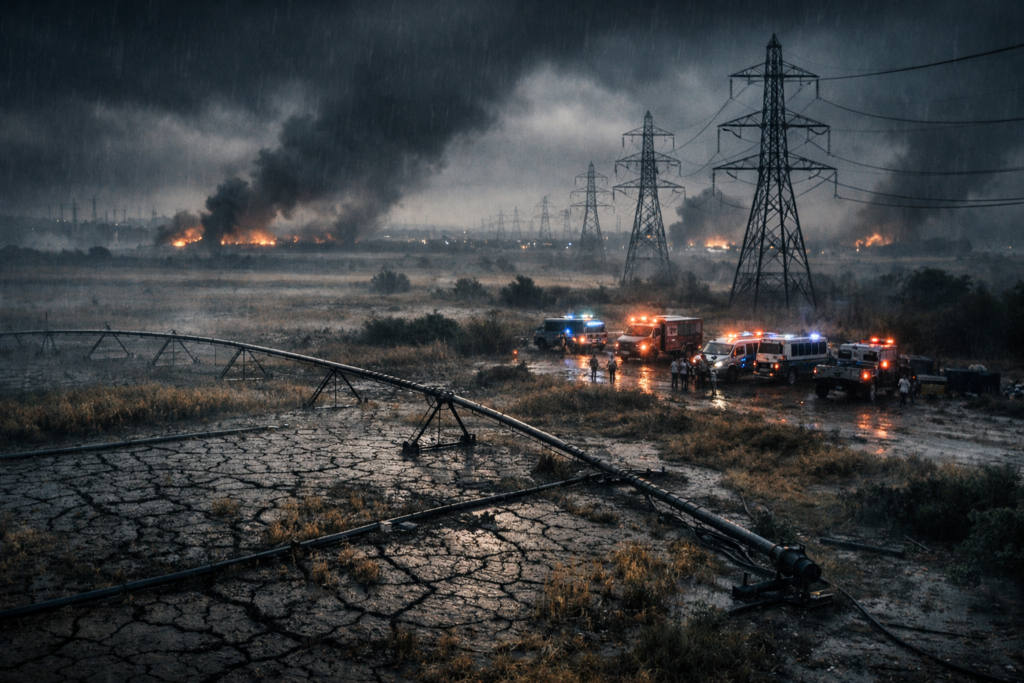
The Prophecy
Over the next 3-7 days, competing energy diplomacy and financial stabilisation efforts could produce acute market and political stress, while protest movements and a storm landfall amplify logistical and security strains. If trends continue, expect short-lived supply disruptions, targeted diplomatic friction, and localized spikes in civil unrest across multiple regions.
Political and market friction are likely to intersect quickly. The headline “Zelenskyy furious as Trump announces deal to buy Russian diesel” signals a diplomatic flashpoint that could reverberate through European and Black Sea fuel logistics; if governments respond with objections or reciprocal trade measures, regional diesel shipments and contractual flows may be delayed or rerouted, producing price volatility at fuel terminals.
Financial measures announced by New Delhi — reflected in “India Announces Emergency Steps to Support Plunging Currency” — increase the probability of short-term capital controls or liquidity interventions that could unsettle neighbouring markets. That pressure, coupled with politically charged mass actions such as “Supporters of Imran Khan start march on locked-down Islamabad” and the allegation that “India’s ‘Cockroach’ party accuses government of mass detention of members ahead of weekend protest,” raises the chance of rapid, localized disruptions to transportation and digital services used by remittance and trade corridors across South Asia.
Concurrently, mass mobilisations and remembrance events described in “France Protests, Israel’s ‘politically charged’ remembrance, Ethopia, Ukraine” and “French students vow to keep up protests as UN voices ‘concern’ over violence” create a high-probability window for escalated clashes in urban centres. These events could force temporary closures of ports, rail yards, or customs checkpoints in affected European cities, compounding supply-chain friction already under pressure from naval rotations such as “The long-deployed USS Lincoln returns home to San Diego Bay.”
Finally, the landfall of Hurricane Isaias in Florida, reported as “Hurricane Isaias makes landfall in Florida and hammers Gulf coast,” increases near-term logistics and infrastructure stress in North America. Expect short-term rerouting of coastal shipments, temporary fuel demand spikes for emergency services, and accelerated inspection cycles that will amplify the operational impacts of the geopolitical and financial disruptions described above. Taken together, these signals could produce measurable but uneven effects on energy markets, critical transport nodes, and urban public order in the 3-7 day window if trends continue.
Key Factors Driving This Prophecy
Source Headlines Analyzed
Risk Categories
Multiple corroborated reports link energy diplomacy, emergency financial measures, and coordinated protests across several regions; because each signal is supported by independent reporting but outcomes depend on fast-moving political decisions and weather, confidence is elevated but not certain.
Regions Most At Risk
Pattern-based speculative forecast, not certainty.